

Colour Matching for Unit Soles: Consistent Shades Every Batch
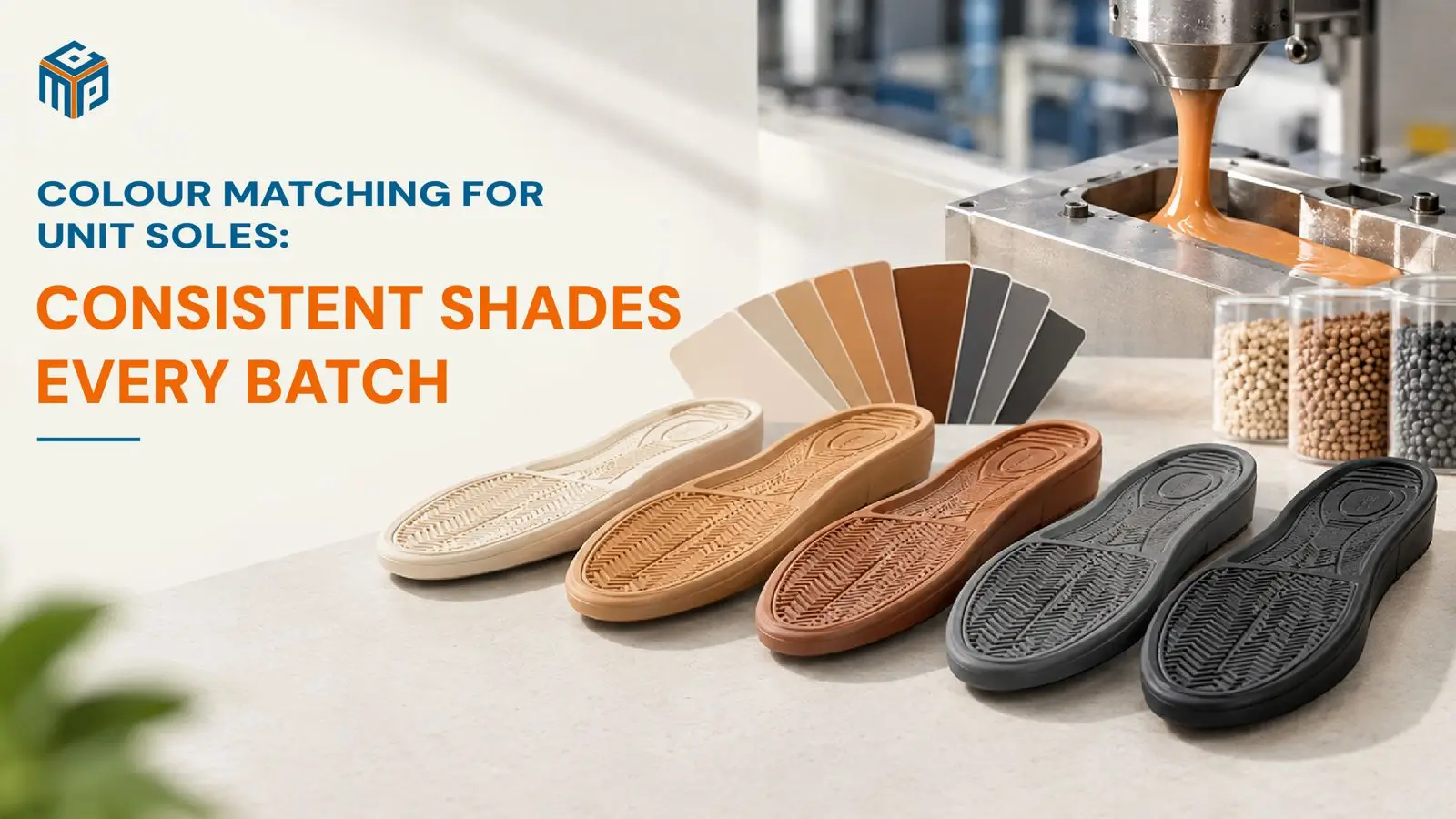
PU material for unit soles takes colour differently depending on its density, so the same pigment dose can look paler on one sole and darker on another. That is what makes colour matching for unit soles tricky.
This guide covers what shifts the shade, how to match it reliably and how to keep it steady once you move into production.
What Is a PU Unit Sole, and Why Is Colour Matching Tricky?
A unit sole is a complete, pre-moulded PU sole that gets attached to the upper as one piece, rather than being built up in layers on the shoe itself. It is cast in a mould and cured before it ever reaches the assembly line.
Colour matching gets tricky here because the same pigment dose behaves differently depending on the sole underneath it. A shade approved on a flat solid sample can look washed out once it is cast at the actual density and thickness the factory runs. By the time anyone notices, the batch is already poured.
What Affects the Final Shade on a PU Unit Sole?
Density and base PU system. Foam contains tiny air cells that scatter light, so a lower-density sole reads paler than a denser one made with the identical dose. Every PU system also carries its own natural tone, and that base tone shifts the final colour before the pigment is even added.
Dosing, mould temperature and pigment quality. A small weighing error in the pigment dose becomes a visible shade shift once it is scaled to a full batch. Mould temperature changes surface gloss, and gloss changes how a colour reads to the eye. Pigment that varies in strength from lot to lot adds a third variable on top of the first two.
How Do You Match a Shade to a Unit Sole Reliably?
Trial on your own system and density. A shade matched on someone else's bench, at someone else's density, tells you very little about your own mould. Cast your trial at the actual density and thickness you run in production, not a lab sample.
Use a colour standard, a light booth and Delta E. Keep the approved physical sample stored away from light, and ask your buyer to hold a matching copy. Judge every comparison under one fixed light source, since two shades can match under tube light and differ in daylight. Delta E is a number that shows the distance between two colours, with a lower number meaning a closer match. Agree the acceptable Delta E with your buyer before you start production.
How to Keep Unit Sole Colour Consistent Every Batch
Matching the first batch is the easy part. Holding that shade across the hundredth batch is where most factories lose ground.
- Buy pigment from one source and record the lot number against every pour.
- Weigh or meter every dose. A scoop invites the kind of small error that adds up over a week.
- Fix mixing time and mould temperature for each shade, and log both every shift.
- Keep a retained sample from every batch, so a complaint later has something to check against.
Our guide on why colour batches don't match goes deeper into what causes drift once a recipe is locked.
Dual-Density Unit Soles: Matching Outsole and Midsole
A dual-density unit sole pairs a denser outsole with a softer, lighter midsole, and each layer needs its own colour trial. The same pigment dose will not give a matching shade across two different densities, so treat the outsole and midsole as two separate matching jobs rather than one.
Trial both layers together in the finished sole, not as separate pieces viewed on their own. The two colours sit side by side on the shelf, and a buyer judges them as a pair.
Why Choose Mittal Chemplast PU Colourants for Unit Soles
Mittal Chemplast has worked on footwear colour since 1982. The Ansh range of PU colourants is built for unit sole production, with consistency from lot to lot as the starting point.
In-house formulation experts match shades to your sample and develop new formulas when the shade card falls short. That keeps your recipe stable once it is approved, instead of forcing a re-match every time a new pigment lot arrives.
You can see the full range on our footwear manufacturing page.
If your unit sole shade needs matching or your batches are drifting, request a shade match or a free sample for your own system and density.
FAQs
How do you match colour on a PU unit sole?
Trial the shade on your own PU system and density, compare it against a colour standard in a light booth, and confirm the match with Delta E.
Why does unit sole colour vary between batches?
It varies when density, the base PU system, dosing or the pigment lot changes between runs, since each one shifts how the final shade reads.
What PU material is used for unit soles?
Unit soles are moulded from polyurethane (PU) systems and coloured with PU colourants or colour pastes matched to the required shade.
Can I get a custom shade matched for my unit sole?
Yes, Mittal Chemplast matches custom shades to your sample in-house and develops PU colourants for unit soles.
How much colourant do I need for a PU unit sole?
Dosing depends on the shade and system, so follow the supplier datasheet range and weigh every dose for consistency.
Does density affect unit sole colour?
Yes, lower-density PU reads paler because air cells scatter light, so always match on the actual density you produce.
Why choose Mittal Chemplast PU colourants for unit soles?
Ansh PU colourants by Mittal Chemplast are built for unit soles, with in-house colour matching for consistent shades batch to batch.