

How to Achieve a Perfect Matt Black Finish on TPR Soles
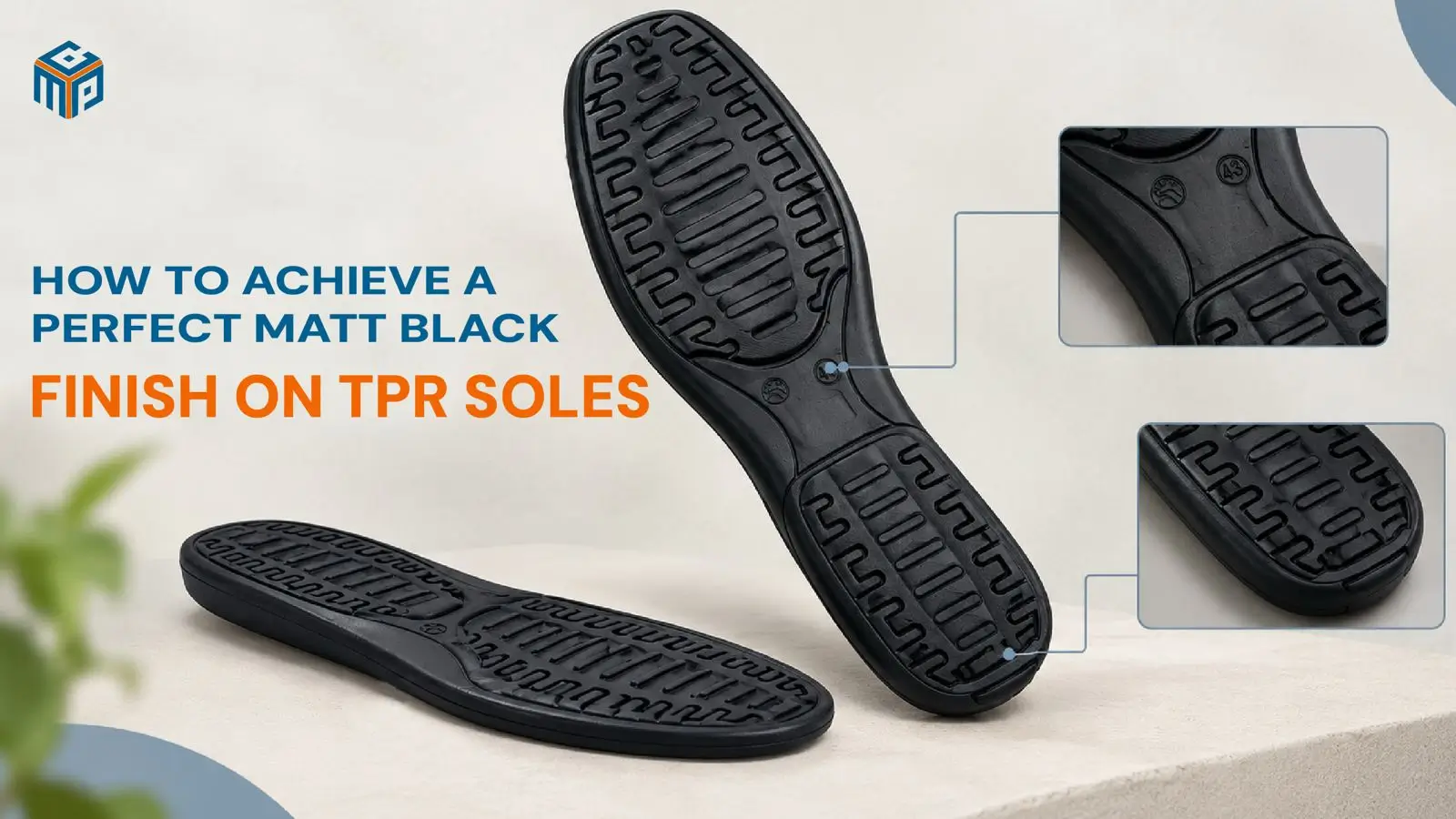
A good TPR matt black finish needs a lacquer made for thermoplastic rubber, a clean sole and an even spray pass. Skip any one of these and the sheen turns patchy or the black looks grey instead of deep.
This guide covers what a correct matt black finish looks like on TPR, why it is harder to get right than it seems, and the surface prep and spray technique that hold it steady batch after batch.
What Makes a Good Matt Black Finish on TPR?
Three things separate a finish that passes inspection from one that gets rejected.
Depth of black. A true matt black should look solid and dark under normal light, not grey or washed out. Weak pigment load or a diluted coat is usually the reason it reads lighter than it should.
Even matt sheen. The whole sole should carry the same level of flatness. A patch of gloss next to a patch of true matt stands out immediately, even to a buyer who is not looking for defects.
Adhesion and durability. The coat needs to flex with the sole and resist scuffing, since a sole that cracks or chips at the flex point shows the TPR underneath through the black coat.
Why Is Matt Black Hard to Get Right on TPR?
TPR (thermoplastic rubber) is more resistant to coating than it looks. Mould release agents leave a thin film on the surface after demoulding, and this film blocks the lacquer from bonding properly. Unlike PVC, which readily absorbs some solvents, TPR holds its surface tight, so prep has to work harder to open it up for adhesion.
Matt black also hides nothing. A gloss black can mask small unevenness in the spray pass, but a matt finish shows every thin patch and uneven pass as a visible sheen difference once it is under light.
Which Lacquer Should You Use for Matt Black TPR Soles?
Use a lacquer formulated specifically for TPR, not one meant for PVC or PU. TPR needs a binder system that can bond to its low-surface-energy finish and still flex with the sole during wear.
Check the technical data sheet for three things before you approve a lacquer: recommended dilution ratio, flash-off time between coats, and whether a primer is needed for your specific TPR compound. Some TPR blends carry more processing oil than others, and that changes how much prep the surface needs.
How to Prepare and Spray TPR Soles for a Matt Finish
Surface prep: Wipe every sole with a cleaning solvent compatible with TPR, using a lint-free cloth, and change the cloth often so it does not spread residue from one sole to the next. Let the solvent flash off fully before spraying. Soles that sit around for a day or two after cleaning should be wiped again, since mould release and oils can migrate back to the surface.
Dilution and gun settings: Measure viscosity with a flow cup rather than judging it by eye, and follow the ratio on the data sheet. Keep gun distance steady, usually in the range your supplier recommends, since spraying too close causes runs and spraying too far gives a dry, dusty coat.
Even passes: Overlap each pass by roughly half the spray width. Keep the gun moving at a constant speed across the whole sole rather than pausing over one spot, since a pause builds up extra lacquer that dries differently from the rest of the coat.
Common Matt Black Defects (and How to Fix Them)
Patchy sheen: Usually comes from uneven gun distance or inconsistent overlap between passes. Humidity can also play a part, since moisture in the air changes how fast the lacquer dries on the sole. Fix it by holding a steady distance and controlling the booth environment.
Peeling: This points to a prep problem almost every time. Mould release residue, finger oil or a lacquer not made for TPR are the usual causes. Clean thoroughly, confirm the lacquer is TPR grade, and run a tape test on the first sole of each shift to check the bond.
Grey or washed-out black: This happens when the coat is diluted too much or sprayed too thin. Check your flow cup time against the data sheet and apply a slightly heavier pass, within the range the supplier recommends.
If you work with PVC soles as well, our guide to troubleshooting PVC spray colour defects covers a similar set of problems on that material.
Why Footwear Makers Choose Mittal Chemplast TPR Spray Lacquers
Mittal Chemplast has supplied footwear manufacturers since 1982. Its TPR spray lacquer range is built for thermoplastic rubber soles, with matt black as a core shade alongside matt brown and custom colours matched to a sample.
In-house formulation experts work on adhesion and sheen consistency, so a batch sprayed this month matches the one sprayed last month. The range is made to suit different TPR compounds, since oil content and surface finish vary between suppliers.
You can see the wider range of footwear chemicals on our footwear manufacturing page.
If your matt black finish keeps coming out patchy or grey, request a TPR matt black spray lacquer sample and test it against your current one on your own soles.
FAQs
How do you get a matt black finish on TPR soles?
Use a TPR-grade matt black spray lacquer on a clean, prepped sole, spray even passes at the right dilution, and let it cure for a deep, even matt look.
Why does my TPR matt black look grey or uneven?
That usually means too much dilution, uneven spray passes, or a lacquer not made for TPR, so fix the dilution and technique and use a TPR-grade lacquer.
What lacquer is best for matt black TPR soles?
A TPR-specific matt black spray lacquer, formulated for adhesion and an even sheen on thermoplastic rubber.
How do you stop TPR spray lacquer from peeling?
Clean every sole of mould-release residue, use a TPR-grade lacquer, and spray within the recommended window after prep.
What causes a patchy matt sheen?
Uneven spray distance, inconsistent passes, or humidity, so keep a steady gun distance with even overlap and a controlled environment.
Can you get custom matt shades like brown or grey on TPR?
Yes, matt brown, grey and custom shades can be matched alongside matt black for TPR soles.
Does Mittal Chemplast supply TPR matt black lacquer?
Yes, Mittal Chemplast manufactures TPR spray lacquers in matt black, matt brown and custom shades for footwear soles.