.svg)

Troubleshooting Common PVC Spray Colour Defects
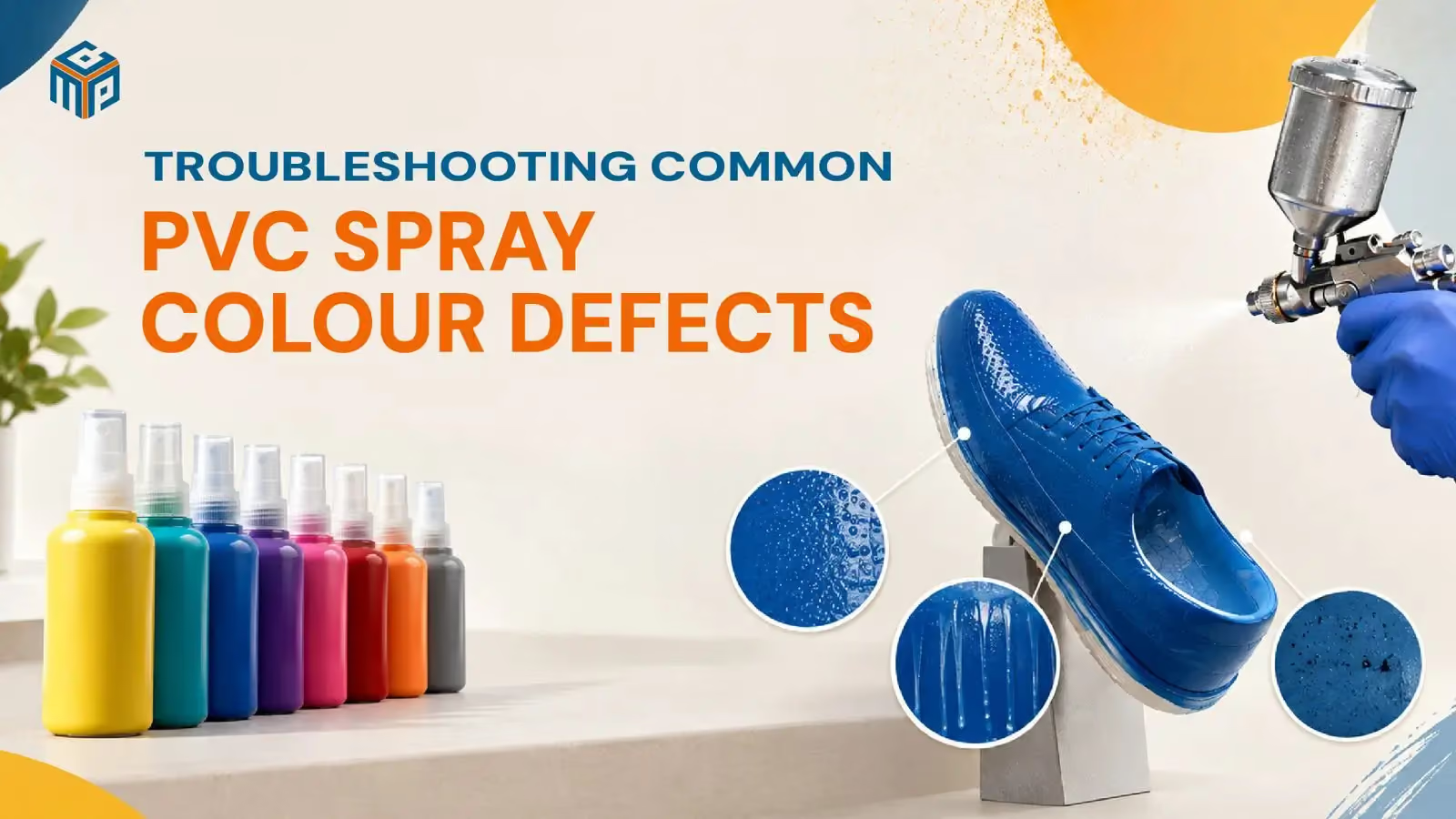
Dealing with PVC spray defects like peeling, patchy coverage, or cloudiness gets frustrating. But that does not mean that you have to deal with it every single day. Any of these finish problems almost always trace back to three main factors: surface prep, lacquer choice, or spray settings. So, once you dial those in, most of your issues vanish.
Scrapping or even reworking footwear costs a lot of time, wasted material, and money. Here is a straight-to-the-point guide to why these four common defects happen and how you can fix them directly on the production line.
What Are the Most Common PVC Spray Colour Defects?
Usually, most defects fall into three groups:
- Adhesion failures: peeling, flaking and lifting at the edges or flex zones.
- Coverage problems: patchy or streaky colour, thin coats and runs.
- Surface faults: orange peel, blushing (a milky haze) and colour bleeding from the sole into the coat.
Each group has a different cause, so name the defect before you change anything. If you alter thinner, pressure and gun distance all at once, you will not know which one fixed it.
Why Does Spray Lacquer Peel or Flake Off PVC Soles?
Peeling and flaking are adhesion failures. The lacquer sits on the sole instead of bonding to it. The usual reasons:
- Plasticiser on the surface. PVC soles contain plasticiser, a softening agent that migrates to the surface over time and leaves a thin oily film. Lacquer cannot grip it.
- Mould release residue. Wax or silicone from the mould stays on the sole after demoulding.
- Dust and finger oil. Handling soles bare-handed leaves marks that show up later as peel spots.
- Wrong lacquer. A lacquer made for another material will not bond to PVC in the same way.
- Coat too thick. A heavy film on a flexible sole cracks at the flex zone, and the pieces flake away. This is the most common cause of spray colour flaking on used shoes.
To confirm an adhesion problem, score a small grid into a sprayed sole, press cellophane tape over it and pull. If colour lifts with the tape, the bond is weak.
What Causes Uneven or Patchy Coverage?
Patchy colour usually comes from viscosity or spray technique.
- Viscosity too high. The lacquer does not atomise evenly, so you get heavy and dry patches side by side.
- Viscosity too low. The coat turns thin and see-through, and it runs.
- Gun distance. Most operators spray from about 15 to 25 cm, but follow the technical data sheet. Too close causes runs. Too far gives a dry, dusty colour.
- Overlap. Each pass should overlap the last by about half. Less than that leaves stripes.
The fix for dilution is to measure it. Use a flow cup, record the time in seconds for each shade, and add thinner in small amounts, stirring and re-measuring each time. Use only the thinner your lacquer supplier recommends.
What Causes Orange Peel in Spray Lacquer?
Orange peel is a dimpled surface that looks like fruit skin. It happens when droplets start drying before they flow together. Common causes are a gun held too far away, high air pressure, a fast thinner, a hot booth or viscosity that is too high.
To fix it, switch to a slightly slower thinner, bring the gun closer and lower the pressure. Apply the coat lightly so it can level.
Why Is a PVC Spray Finish Cloudy, Dull or Blushing?
Blushing is a milky haze in the film. A fast-evaporating solvent cools the surface, and moisture from the air condenses into the wet lacquer. You see it in humid weather, in monsoon months and when cold soles go into a warm booth.
Water inside the compressed air line causes the same problem. To fix it:
- Switch to a slower thinner.
- Spray in drier hours or lower the humidity in the booth.
- Let cold soles reach room temperature before spraying.
- Drain the compressor tank and fit a water separator on the air line.
How Do You Fix Poor Adhesion on PVC Soles?
Follow these steps in order:
- Clean every sole. Wipe with a cleaning solvent that is compatible with PVC, using a lint-free cloth. Change the cloth often, because a dirty cloth spreads oil back onto the next sole.
- Let the solvent flash off. Spray only when the surface is fully dry.
- Spray inside a fixed window. Plasticiser keeps migrating, so soles that sit for days need cleaning again.
- Use a primer if the data sheet calls for one. Soles with high plasticiser content are harder to coat and may need it.
- Use a lacquer made for PVC. Check it against your own sole compound, not only a sample sole.
- Run the tape test. Do it on the first sole of every shift.
Best Practices to Prevent PVC Spray Colour Defects
- Set one cleaning routine and follow it on every sole.
- Log booth temperature and humidity at each shift start.
- Write down the dilution ratio and flow cup time for each shade.
- Spray three to five test soles before you start a full order.
- Test light shades over dark or red soles. Dye from the sole can migrate into a light coat and stain it, which is colour bleeding.
- Clean the gun and nozzle at the end of every shift.
TPR soles need the same prep discipline. Our TPR spray lacquer is made for that material.
Why Footwear Makers Trust Mittal Chemplast's PVC Spray Lacquers
Mittal Chemplast has served footwear manufacturers since 1982. Its PVC spray lacquer is made for PVC footwear, with adhesion and colour durability as the design goals.
- Formulated for adhesion and finish quality on PVC soles
- Consistent batches, with matt and gloss options
- Technical support on application, from dilution to gun settings
You can see the full range on our footwear manufacturing page.
If peeling or patchy colour is costing you pairs, request a PVC spray lacquer sample or technical support. Send photos of the defect and your current spray settings, and we can start from there.
FAQs
Why does my PVC spray colour peel?
PVC spray colour peels when plasticiser, mould-release residue, dust or oil is left on the sole, or when the spray lacquer isn't formulated for PVC. Clean the surface and use a PVC-grade lacquer to stop it.
How do I fix a patchy or uneven PVC spray finish?Fix a patchy PVC spray finish by measuring viscosity with a flow cup, correcting dilution with the recommended thinner, and holding a steady gun distance with about half overlap between passes.
What causes orange peel in spray lacquer?
Orange peel in spray lacquer comes from droplets drying before they level - usually a too-fast thinner, high air pressure, the gun held too far away, or a hot spray booth.
How do I improve spray lacquer adhesion on PVC soles?
Improve adhesion on PVC soles by cleaning each sole with a compatible solvent, spraying within a fixed window after cleaning, using a lacquer made for PVC, and confirming the bond with a tape test.
Why is my PVC spray finish cloudy?
A PVC spray finish turns cloudy (blushing) when moisture condenses into the wet film - use a slower thinner, lower the booth humidity, and drain water from your air line to clear it.
.svg)